

Green infrastructure projects manage stormwater naturally, improve water quality, and create vibrant community spaces. These projects reduce flooding, enhance local ecosystems, improve water quality, and add lasting environmental value for the communities we serve.
Green infrastructure uses natural processes to manage stormwater, reduce flooding, and improve the health of our communities. Instead of relying only on traditional pipes and tanks, these projects work with the environment capturing rain where it falls and putting it to good use. How these projects help:
- Reduce Flooding and Prevent Basement Backups
Rain gardens, permeable pavement, bioswales, and restored waterways soak up and slow down stormwater, helping prevent basement backups, street flooding, and sewer overflows. - Improve Water Quality
By filtering runoff through soil and vegetation, green infrastructure removes pollutants before they reach our rivers and streams, protecting the region’s drinking water sources and aquatic habitats. - Create Greener, Healthier Neighborhoods
Trees, native plantings, and community-designed green spaces add beauty, shade, and cooling, enhancing public spaces and improving air quality. - Support Local Ecosystems
Native plants and restored natural areas attract pollinators, birds, and other wildlife, helping rebuild urban ecological systems.
Across Pittsburgh, our projects bring together engineering, ecology, and community engagement to create solutions that work for the people who live and work here.
Learn More about Types of Stormwater Management Tools
Rain Gardens
A rain garden is a shallow planted area designed to catch rainwater from roofs, driveways, or streets and let it slowly soak into the ground. Filled with local vegetation, often including hardy grasses and colorful perennials, rain gardens are an attractive, effective way to manage stormwater and reduce runoff from communities prone to storm-related flooding.
As the water filters through the soil and plants, many pollutants are naturally removed. These gardens also double as small wildlife habitats, offering food and shelter for butterflies, songbirds, and other creatures. More advanced rain gardens that include engineered soils and drainage features are often known as bioretention.
Bioswales
Bioswales are shallow, planted channels that help capture and clean stormwater as it flows across the landscape. They’re designed to handle the initial surge of storm-related runoff that typically carries the most pollutants.
By slowing the water down, bioswales naturally filter out contaminants and allow more water to soak into the ground, helping replenish local groundwater supplies. They’re also incredibly flexible in where they can be built, fitting neatly into medians, cul‑de‑sacs, curb extensions, and other public spaces or traffic‑calming features.
Home Stormwater Management
Rain Barrels: You can direct water from your roof into a rain barrel and then repurpose it to water your garden or wash your dog. There are a variety of sizes and styles available for purchase or you can make your own.
Plant a Tree: Trees are our stormwater soldiers. They soak up more water than any type of vegetation and provide many environmental benefits. If you have room, plant one in your yard or organize a neighborhood planting. Use species that are native to Pennsylvania and can adapt to our climate.
Install a Rain Garden: Rain gardens are designed like a bowl so they can capture and hold the rain during a storm. When it passes, the water slowly soaks into the ground. They range in complexity, use soils that are more absorbent, and work well with native plants or vegetation that can withstand our climate.
Rain Garden Resources
Raingarden Plants from the Pennsylvania Agricultural Extension
Layers of a Raingarden
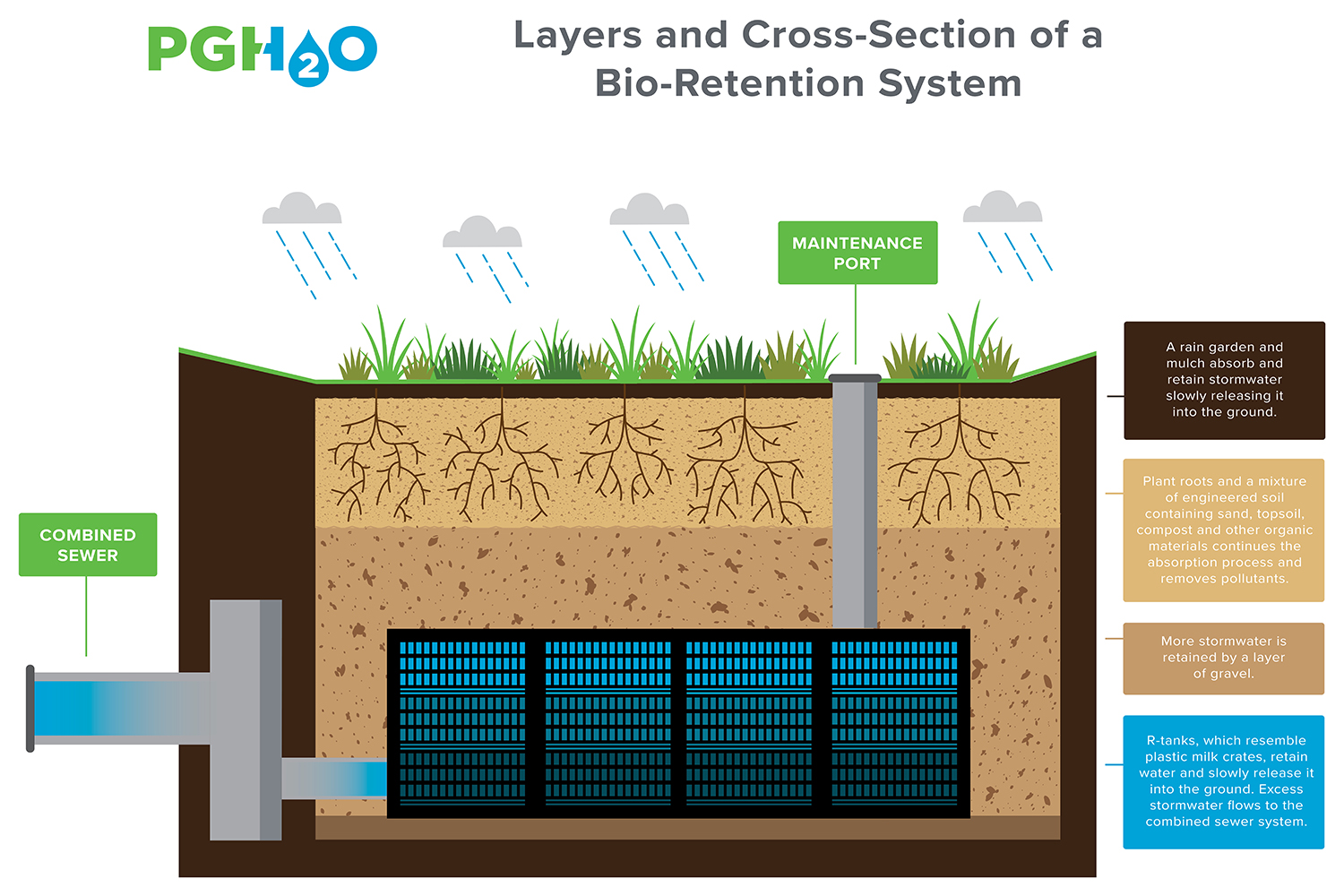
Permeable Pavers: If a future home improvement project involves repaving a driveway or walkway, or refinishing a deck or patio, consider permeable pavers. They use materials that absorb water and come in a variety of decorative styles that are nicer than concrete.
Home Composting: Compost organic materials which can later be used to enrich your soil. If composting at home, be aware of our City's composting ordinances and make sure your compost is contained and drainage is controlled. Never add animal products or animal wastes to your compost and avoid adding synthetic fibers like plastic.
Southwestern PA’s Homeowner’s Guide to Stormwater provides instructions for developing and implementing a stormwater management plan for your property. Visit www.stormwaterguide.org to create your plan online and watch Penn State University's instructional videos.
Featured Stormwater Projects
 Stormwater
Stewart Avenue Stormwater Improvements Project
In partnership with the City of Pittsburgh, we are planning a stormwater and roadway improvements project to address flooding issues at and around Stewart Avenue in the Carrick neighborhood.
 Stormwater
Woods Run Stormwater Project: Phase Two
Riverview Park is a city park located in the Perry North neighborhood. This project will use green stormwater infrastructure in the park to capture rainwater runoff, stabilize streams, and redirect and store stormwater.
 Stormwater
Bus Rapid Transit Stormwater Project
PWSA and Pittsburgh Regional Transit (PRT) are partnering to incorporate green stormwater infrastructure into PRT’s Bus Rapid Transit (BRT) project.